Types of Livestreams: 6 Smart Formats That Match Your Goals
Most people hear the word livestream and imagine a single camera pointed at a stage.
That’s not how modern livestreaming works.
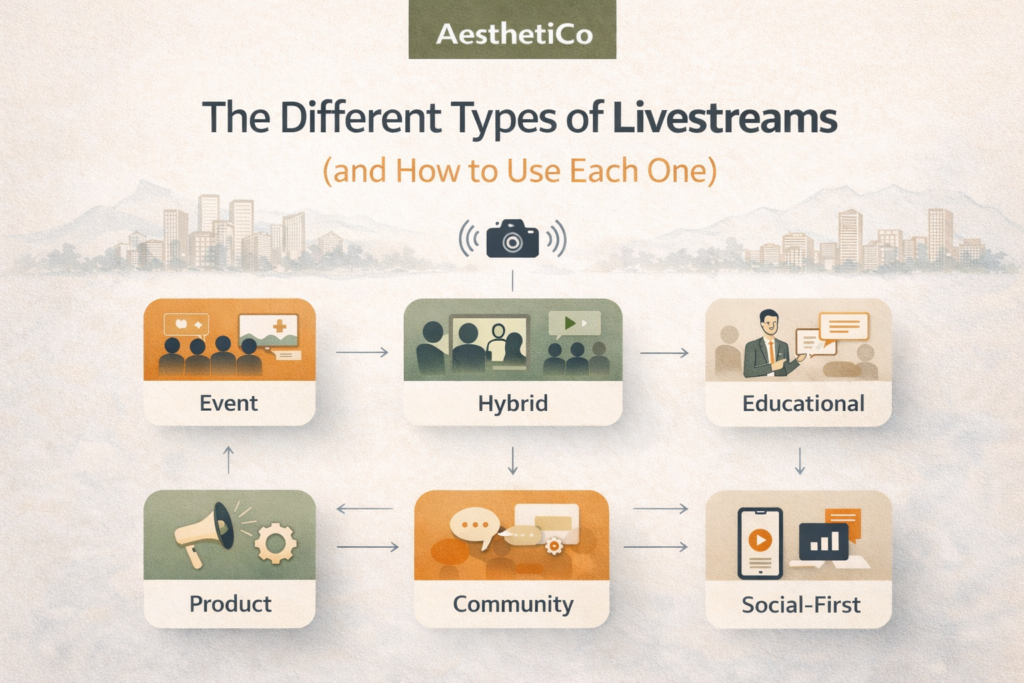
In reality, there are multiple types of livestreams, each built around a different outcome: awareness, fundraising, education, sales momentum, or community building. The problem is that many organizations choose a format based on convenience or platform—not purpose.
At AesthetiCo, we treat livestreaming as a system. The type of livestream you choose determines production design, pacing, audience engagement, and how the content is repurposed afterward.
Below is a clear breakdown of the main types of livestreams, how each works, and when to use them.
1. Event Livestreams
Best for: reach, awareness, content capture
This is the most recognizable of the types of livestreams: conferences, galas, panels, keynotes, and performances streamed to remote viewers.
The strongest event livestreams are built for two audiences at once:
- in-room attendees
- remote viewers
What makes them effective
- multi-camera coverage
- separate audio mix for online audiences
- branded graphics and lower thirds
- moderated chat or Q&A
Where this format shines
- conferences
- fundraisers
- corporate summits
- public forums
2. Hybrid Livestreams
Best for: Accessibility and scale
Hybrid livestreams are built from the start for both in-person and remote audiences. This is now the standard for professional events.
What makes hybrid different
- The run of show includes moments just for remote viewers
- Speakers acknowledge both audiences
- Visuals are framed for screens, not just the room
This format is ideal for organizations that want to expand reach without expanding logistics.
3. Educational Livestreams
Best for: Authority and trust
These include:
- Workshops
- Trainings
- Webinars
- Masterclasses
They are less about spectacle and more about clarity, pacing, and interaction.
What matters most
- Clear structure
- Visual slides and screen sharing
- Live Q&A
- Breakout or poll moments
These livestreams work especially well for professional services, nonprofits, and B2B brands.
4. Product or Service Launch Livestreams
Best for: Sales and momentum
This type of livestream is built like a live commercial—but with storytelling and audience interaction.
Common use cases
- New product releases
- Service announcements
- Platform rollouts
What makes them effective
- A clear narrative
- Demonstrations
- Testimonials or case examples
- A strong closing CTA
They work best when paired with a follow-up email or ad campaign using the recorded footage.
5. Community Livestreams
Best for: Loyalty and connection
These are less polished and more relational:
- Town halls
- Q&A sessions
- Founder chats
- Nonprofit updates
They build trust by showing the people behind the brand.
What matters
- Authentic tone
- Real-time responses
- Simple visuals
- Clear moderation
6. Social-First Livestreams
Best for: Engagement and reach
These are platform-native streams (Instagram Live, LinkedIn Live, YouTube Live) designed for shorter attention spans.
Characteristics
- 15–45 minutes
- Fast pacing
- Strong hooks
- Mobile-first framing
They’re ideal for thought leadership, behind-the-scenes, or announcements.
Why Most People Choose the Wrong Type
They start with the platform, not the purpose.
A webinar run like a product launch feels awkward.
A community Q&A filmed like a conference feels stiff.
The format must match the outcome.
The AesthetiCo Livestream Selection Framework
Before choosing a format, we ask:
- What is the primary goal?
- Who is the audience?
- What action should viewers take?
- How will the content be reused?
From there, the right livestream type becomes obvious.
How AesthetiCo Designs Livestreams
We don’t sell templates.
We design systems.
Every livestream we build is:
- Purpose-driven
- Structured
- Designed for repurposing
- Built for both live and future audiences
FAQ
What type of livestream is best for my business?
It depends on your goal: sales, awareness, or trust.
Can one livestream fit multiple types?
Yes, with the right structure.
How long should a livestream be?
Most perform best between 30–90 minutes.
👉 Start with a strategy call. No pitch. Just clarity.