Video Production · law firm videos
Law Firm Testimonial Videos: What Makes Them Credible Instead of Cringey
A lot of law firms like the idea of testimonial videos.
That part is easy.
The harder part is making them actually feel believable.
Because a testimonial video can help a law firm a lot. It can make the website feel more trustworthy, help a prospective client feel less hesitant, and give the firm a stronger kind of proof than a written quote alone. But it can also go sideways fast. If it feels too polished, too scripted, too vague, or too self-congratulatory, it starts doing the opposite of what it was supposed to do.
That is the line.
For Denver law firms especially, testimonial videos can be one of the strongest trust-building assets on the site when they feel honest and specific. They should not feel like ads. They should not sound like someone repeating brand language back to the camera. They should feel like a real person talking about a real experience with a firm they trusted during an important moment.
That is what makes them powerful.
Why Law Firm Testimonial Videos Matter
Most potential clients do not come to a law firm website in a neutral state.
They are often stressed, uncertain, skeptical, or trying to make a decision they do not feel fully equipped to make. They are reading practice area pages, looking at attorney bios, scanning reviews, and trying to figure out one core thing:
Can I trust this firm?
That is where testimonial videos can do real work.
A written testimonial can help. But a video adds something different. It lets a potential client see and hear someone describe what it actually felt like to work with the firm. That makes the proof feel more tangible. More human. Harder to dismiss.
For law firms, that matters because trust is usually the barrier. Not awareness. Not entertainment. Not clever branding.
Trust.
A good testimonial video helps reduce that friction.
What a Good Testimonial Video Should Actually Do
A law firm testimonial video should not just say the firm was “great.”
That is too vague to matter.
A good one usually does three things well.
1. It shows the client had a real problem
The viewer should quickly understand that this person was dealing with something serious enough to need help.
That context matters because it gives weight to the testimonial.
2. It explains what the experience felt like
The strongest testimonials usually talk about things like communication, clarity, responsiveness, confidence, relief, and feeling taken seriously.
That is often more persuasive than abstract praise.
3. It helps the next client feel more comfortable
The best testimonial videos make the viewer think, “If they helped this person through that, maybe they can help me too.”
That is the real job.
What Makes a Testimonial Video Feel Credible
This is where most firms either get it right or get it wrong.
A credible testimonial video usually has a few specific qualities.
It feels specific
Generic praise is weak.
If the client just says the firm was amazing, professional, and great to work with, the video usually blends into everything else. But when the person talks about what they were dealing with, what they were worried about, how the firm handled communication, or why they felt taken care of, the testimonial starts to feel real.
Specificity is what gives it weight.
It sounds like the client, not the firm
This is a big one.
A testimonial starts feeling fake the second it sounds like the law firm wrote it. The language should feel natural to the person speaking. It does not need to be messy. It does need to sound like a real human being, not polished sales copy.
It is emotionally grounded without being dramatic
Law firm testimonial videos work best when they feel calm and honest.
They do not need to be overly emotional to be effective. In fact, when firms push too hard for emotional impact, the result often feels forced. What matters is sincerity.
The production is polished but restrained
This is not the place for flashy editing.
Clean audio, good lighting, strong framing, thoughtful editing. That is enough. The production should support credibility, not compete with it. The client should feel like the focus, not the filmmaking.
Where Law Firm Testimonial Videos Usually Go Wrong
Most weak testimonial videos fail in predictable ways.
They are too broad.
They feel over-rehearsed.
They sound like marketing copy.
They say the firm was excellent without giving any reason the viewer should believe it.
Or they are edited in a way that makes everything feel too shiny to trust.
Another common problem is that firms choose the wrong person.
Not every happy client is the right fit for a testimonial video. The best testimonial subjects are usually people who can speak clearly, stay grounded, and explain their experience in a way that other potential clients will actually connect with.
Timing matters too. So does comfort. So does context.
A testimonial should not feel extracted.
It should feel offered.
What a Law Firm Testimonial Video Should Include
Not every testimonial has to follow the same formula, but a strong one usually includes some version of the following.
What the client was facing
Not every detail. Just enough context to understand the seriousness of the situation.
Why they reached out to the firm
This helps the viewer connect the story to the moment of uncertainty they may be feeling themselves.
What it was like to work with the firm
This is usually where the most valuable trust signals show up: communication, responsiveness, patience, clarity, professionalism, confidence.
How they felt afterward
Relief, gratitude, confidence, or simply feeling like they were in good hands. That kind of reflection carries weight when it is honest.
The key is not to force every question into one video. It is to capture enough truth that the final piece feels specific and believable.
Where Denver Law Firms Should Use Testimonial Videos
A lot of firms either bury testimonials or scatter them randomly.
Both are mistakes.
A testimonial video should live where it helps reduce hesitation.
That often means:
- on the homepage, if it reinforces the overall trust message
- on a key practice area page, especially where potential clients need more reassurance
- on a dedicated reviews or results page
- near a contact or consultation call to action, where credibility matters most
For Denver law firms using video strategically, the point is not to scatter proof everywhere. It is to place it where a potential client is most likely to need reassurance before taking the next step.
Sometimes a shorter cut can also support LinkedIn, email follow-up, or intake content. But the main point is this: testimonial videos should be placed deliberately.
They are not decoration.
They are trust assets.
Should Every Law Firm Use Testimonial Videos?
No.
This is important.
Not every firm needs testimonial videos immediately. Some firms should start with a homepage overview video or attorney bio videos first. Some firms do not yet have the right clients or the right setup for testimonial content. Some practice areas may require more caution or simply lend themselves less naturally to this format.
But for firms that do have the right fit, testimonial videos can be one of the strongest trust-building assets on the site.
The point is not to force them.
The point is to use them when they make the website stronger.
What Makes Testimonial Videos Especially Useful for Law Firms
There are a lot of industries where testimonial videos are just nice social proof.
For law firms, they can mean more than that.
That is because legal hiring decisions often involve:
- uncertainty
- fear of making the wrong choice
- emotional weight
- high trust requirements
- concern about whether the attorney will actually care
A strong testimonial video can help bridge that gap in a way a generic written quote often cannot. It shows that someone else had to make the same kind of trust decision and felt good about it afterward.
That is a strong signal.
How to Keep a Testimonial Video from Feeling Cringey
This is really the heart of it.
If you want a testimonial video to work, do less pretending.
Do not over-script it.
Do not make the client sound like a spokesperson.
Do not over-edit the emotion.
Do not force a dramatic arc if it is not there.
Do not treat it like a commercial.
Instead:
- choose the right person
- ask better questions
- give them room to answer naturally
- shape the edit around what feels true
- keep the focus on the experience, not the praise
That is what keeps it credible.
What This Usually Looks Like with AesthetiCo
For us, testimonial videos are usually part of a broader trust-building system.
Sometimes they support a homepage video. Sometimes they reinforce a high-priority practice area page. Sometimes they sit alongside attorney bio videos and overview content as part of a more complete website video strategy.
The goal is not to create polished praise for its own sake.
The goal is to create proof that actually helps a future client feel more comfortable contacting the firm.
That means choosing the right person, shaping the questions the right way, creating a low-pressure production environment, and editing the final piece so it feels composed without feeling artificial.
That is the line we care about.
Are Law Firm Testimonial Videos Worth It?
Yes, when they are done well and used in the right place.
They are worth it when they help a potential client trust the firm faster.
They are worth it when they reinforce what the site is already trying to communicate.
They are worth it when they feel specific, honest, and human.
They are not worth it when they sound scripted, feel generic, or exist only because someone thought testimonials were “supposed” to be on the site.
That is the real standard.
Frequently Asked Questions
Are testimonial videos better than written testimonials?
Not always, but they can be stronger. A video adds tone, presence, and emotional context that written quotes usually cannot.
Where should a law firm put testimonial videos on its website?
Usually on the homepage, a key practice area page, or a dedicated reviews or results page. The right placement depends on where trust needs reinforcement.
How long should a law firm testimonial video be?
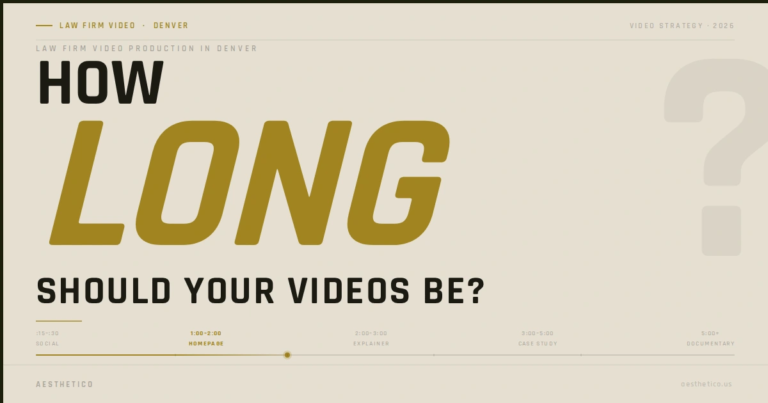
Usually shorter than firms think. Around 45 to 90 seconds is often enough if the content is strong and specific.
What makes a testimonial video feel fake?
Over-scripted answers, vague praise, too much polish, and language that sounds like the firm wrote it instead of the client.
Should small law firms use testimonial videos too?
Sometimes, yes. A strong testimonial can be especially helpful for a smaller firm trying to build trust quickly, as long as the right client and context are there.
Can one production day capture testimonial videos and other law firm content?
Yes. A well-planned shoot can often include testimonial content along with attorney bio videos, a homepage asset, or practice area content.
Final Thoughts
Law firm testimonial videos work when they feel true.
That is it.
They should not feel like commercials. They should not feel like a client reading a script. They should feel like a real person describing what it was like to trust the firm with something that mattered.
That is what makes them useful.
If your firm wants testimonial videos that feel polished, credible, and strategically placed where they can actually help the website perform better, that is exactly the kind of work AesthetiCo is built for.
Check out our law firm video production services, read attorney bio videos for law firms, see what videos should a law firm put on its website first, or talk with our team.
look as credible as it is?